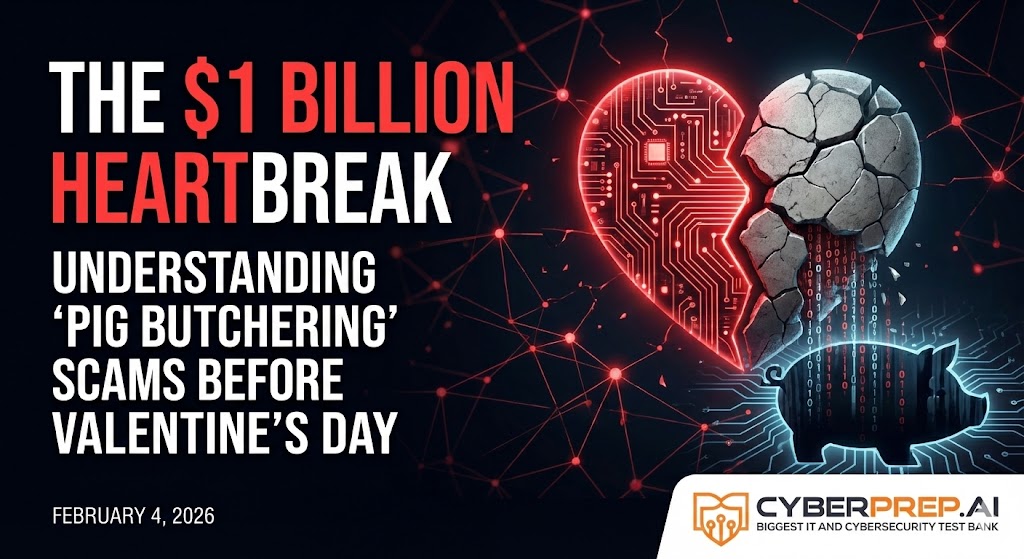
In 2026, hackers don’t just break into firewalls; they break into hearts.
The “Pig Butchering” scam (or Sha Zhu Pan) is not your grandmother’s Nigerian Prince email. It is a sophisticated, long-con psychological operation that is draining billions from victims.
But for you, the future cybersecurity professional, this isn’t just a crime story. It is a textbook example of Pretexting and Social Engineering.
The Anatomy of the Attack (The “Kill Chain”)
- The Hook (OSINT): The attacker finds a victim on LinkedIn or a dating app.
- The Grooming (Pretexting): They spend weeks building trust. They don’t ask for money; they talk about “investing.”
- The Malicious Payload: They send a link to a fake trading platform. It looks real, but it’s a trap.
Exam Connection: Why this matters for Security+ / CISSP
The exam will ask you to identify the specific principles used here:
- Trust: Building a relationship before striking.
- Scarcity: “This investment opportunity ends tonight.”
- Urgency: Forcing the victim to act fast.
📱 Turn Your Commute Into Study Time
You can’t learn Social Engineering just by reading a blog post. You need to practice identifying these threats in realistic scenarios.
CyberPrep.ai is the only AI-powered tutor that fits in your pocket. We have over 100,000+ practice questions including thousands on Social Engineering ready for you right now.
- Waiting for the bus? Do a 5-minute quiz.
- Lunch break? Master the “Phishing” domain.
Download the app and search for “Pretexting” to test yourself:
🍏 Download on iOS App Store
🤖 Download on Google Play Store
Conclusion
If a stranger offers you guaranteed crypto returns, it’s a scam. If an app offers you a guaranteed way to pass your certification… well, that’s just CyberPrep.ai