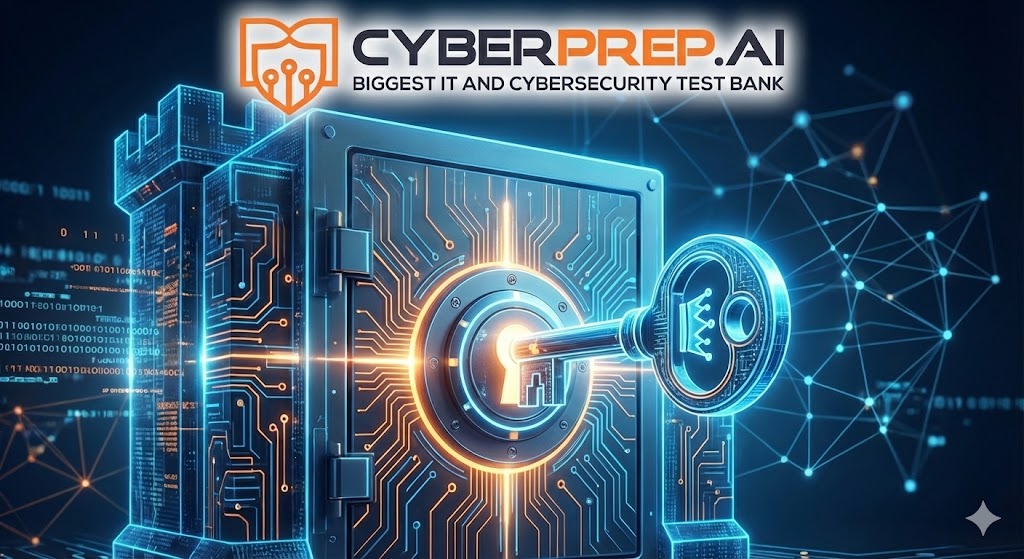
If an IAM Analyst manages the “digital doors” to a company, then a Privileged Access Management (PAM) specialist manages the master keys.
In every organization, there are “privileged accounts” the IT admins, the database managers, and the super-users who have the power to delete servers, change security settings, and access sensitive payroll data.
For a hacker, these accounts are the ultimate prize. If they get a regular employee’s password, they can read some emails. If they get a privileged password, they can own the entire network.
Today, we’re breaking down the three pillars of PAM that you must know for your certification exams.
1. The Principle of Least Privilege (PoLP)
This is the “Golden Rule” of cybersecurity. It states that users should only have the minimum level of access necessary to perform their job and nothing more.
- The Exam Context: On the Security+ exam, you’ll often see scenarios where an employee is over-provisioned (given too much power). The answer is almost always to apply Least Privilege.
- The Reality: PAM tools automate this by ensuring an admin doesn’t stay an admin 24/7. They only get those rights when they are actually working on a task.
2. Just-In-Time (JIT) Access
Why give an IT admin permanent access to the company’s financial database? If that admin’s account is compromised at 3 AM while they are sleeping, the hacker has a direct line to the data. Just-In-Time (JIT) access means:
- The account has zero permissions by default.
- When the admin needs to fix a bug, they “check out” the privileges.
- The privileges automatically expire after two hours.
3. Credential Vaulting and Rotation
In a mature PAM environment, human beings don’t even know the passwords to sensitive systems. Instead:
- Passwords are stored in a secure digital vault.
- The vault automatically rotates (changes) the password every time it is used.
- The user logs into the vault, and the vault “injects” the password into the target system without the user ever seeing it.
Why This Matters for Your Career
PAM is one of the fastest-growing sub-sectors of cybersecurity. Companies are moving away from static passwords and toward “Zero Trust” architectures. If you can explain how a vaulting system works or how to implement JIT access, you are moving from “Entry Level” to “Specialist” status.
Don’t Get Tripped Up on Exam Day
The Identity and Access Management domain is heavy on terminology. Do you know the difference between ABAC (Attribute-Based) and RBAC (Role-Based)? Do you know when to use a Jump Server vs. a PAM Vault?
Exam questions aren’t just about definitions—they are about scenarios.
- Studying for Security+? Our test bank features dozens of scenario-based questions on access control models and account management.
- Prepping for the CISSP? Domain 5 (Identity and Access Management) is one of the most technical parts of the exam. Our CISSP course includes 4,000+ practice questions designed to mirror the “pro-level” difficulty of the actual test.
Master the “Keys to the Kingdom” before you step into the testing center.